
Everyone Hates the Man Running FIFA.
Turns Out That’s Always Been the Job.
Gianni Infantino has been compared to a Roman emperor, accused of an ethics breach, and gently humiliated by his own best mate in the Oval Office. A look back at 122 years of FIFA presidents suggests he’s not even close to the worst of them. He’s just the most recent.
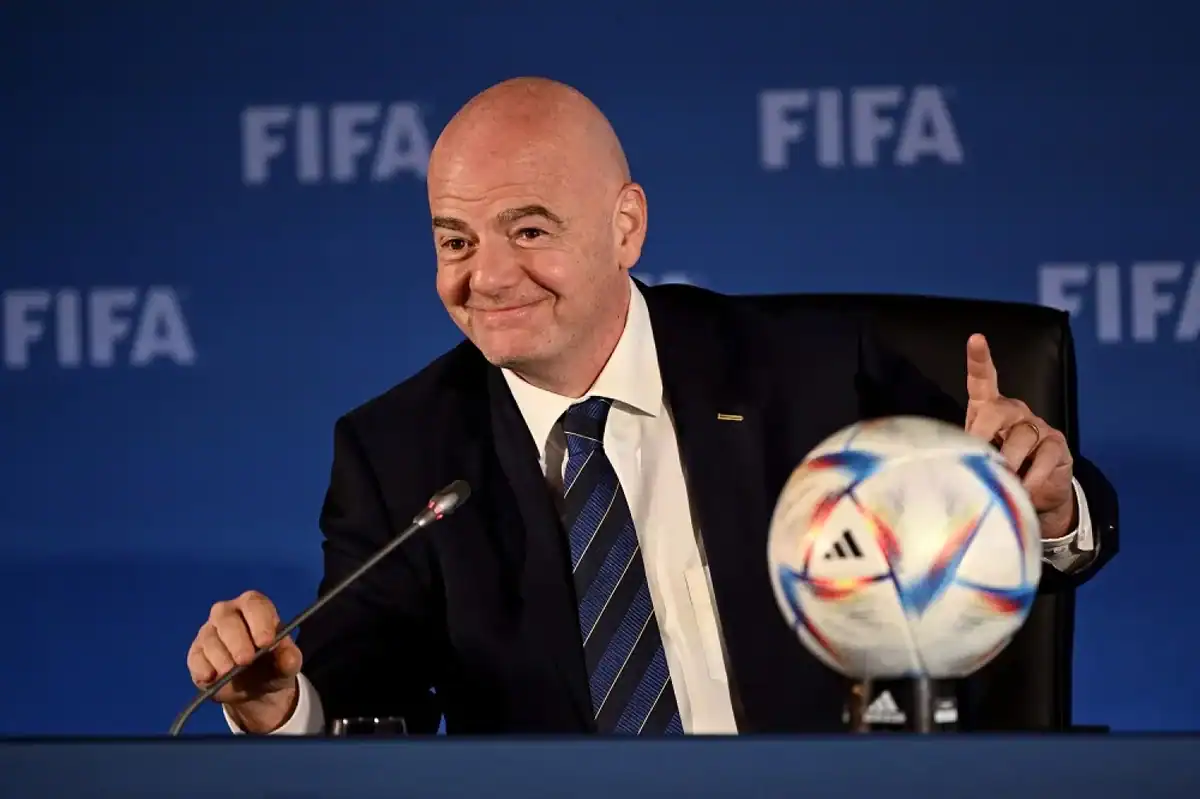
FIFA’s biggest, longest, most heavily marketed World Cup is now well under way, and somehow the man running the show is generating more headlines than the football. Gianni Infantino, FIFA president since 2016, has been called football’s Nero by the head of the players’ union, accused of an ethics breach by a leading sports advocacy group, and quietly made to look a fool by the very man he handed an actual peace prize to. None of that is good. All of it, weirdly, makes him pretty normal by FIFA standards.
This is the most expensive World Cup the organisation has ever staged, spread across three countries and 48 teams, and Infantino has spent the build-up being branded the most hated man in football by people who, a decade ago, were perfectly happy to let him quietly tidy up after Sepp Blatter.
So is this new? Is Infantino a uniquely awful custodian of the world’s most popular sport, or is loathing the man at the top simply part of the FIFA presidency’s job description, passed down like a particularly grim family heirloom?
The Charge Sheet
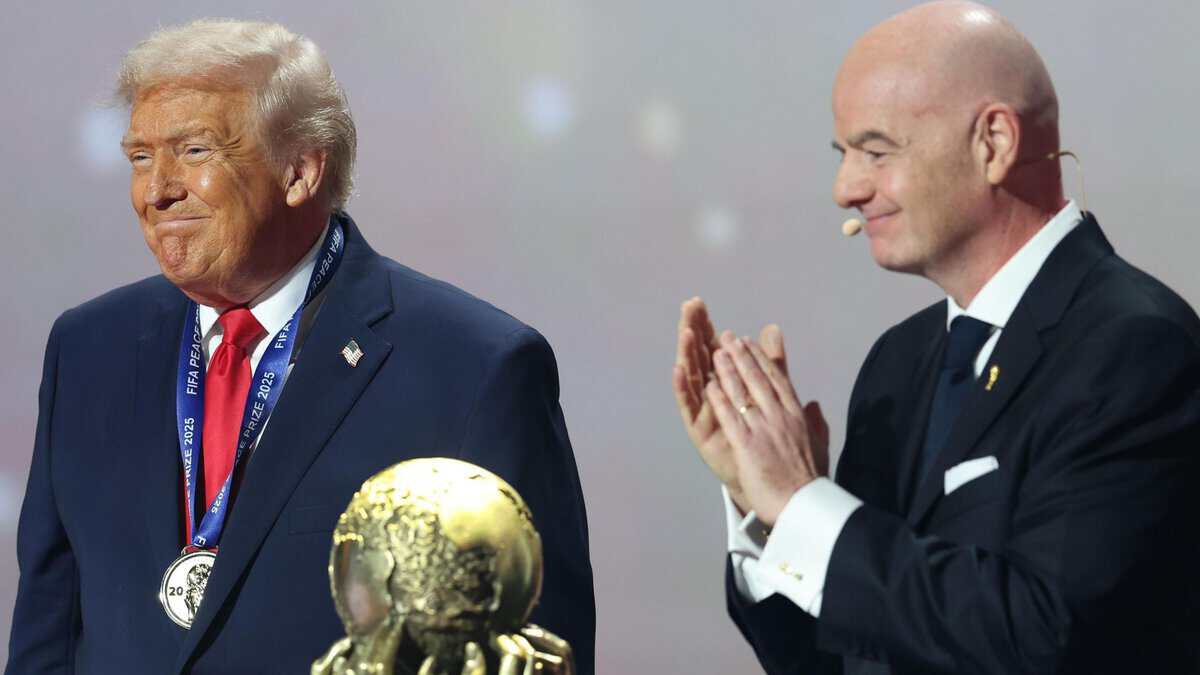
Start with the obvious stuff, because there’s a lot of it. Infantino spent last December presenting Donald Trump with FIFA’s brand-new Peace Prize at the World Cup draw, an act so far outside the organisation’s supposed political neutrality that an advocacy group filed a formal ethics complaint within days. He has defended World Cup ticket prices that priced out the “vast majority” of ordinary fans, according to Football Supporters Europe, while joking that he’d personally deliver a hot dog to anyone willing to pay $2 million for a resale Final ticket. And three days before kick-off, one of African football’s most respected referees was turned away at the US border with no explanation, despite Infantino’s repeated promises that the visa process would be smooth for everyone.
- The Peace Prize — December 2025 At the World Cup draw in Washington, Infantino presented Trump with FIFA’s first-ever Peace Prize, telling him this was “your peace prize” in front of the assembled football world. Trump has since launched strikes on Iran, one of the 48 teams competing at this tournament.
- The $2m Hot Dog — May 2026 Defending dynamic ticket pricing and a resale market in which Final tickets were reportedly listed at $2 million, Infantino offered to personally bring a hot dog and a Coke to anyone who actually paid for it. The attorneys general of New York and New Jersey have since opened an investigation into FIFA’s ticketing practices.
- The Vanishing Referee — June 2026 Somali official Omar Artan was denied entry to the United States days before he was due to officiate at the tournament, despite a year of assurances from Infantino that the visa process for the World Cup would be straightforward for everyone involved.
- The Term That Wasn’t — December 2022 FIFA’s own governance committee quietly ruled that Infantino’s first 39 months in the job — completing the term of his disgraced predecessor — didn’t count towards the organisation’s 12-year presidential limit. The maths now means he can stay until 2031, and CAF, the AFC and CONMEBOL have already endorsed him for the vote.
He loves dictators and billionaires. When he sees people with money, he melts.
Anonymous FIFA Council member, speaking to Politico
It’s a fairly comprehensive charge sheet, and Infantino’s response to most of it has been to sound personally wounded rather than to engage with any of it. “I don’t understand why some of you are so mean,” he told journalists at a FIFA Congress in 2023. “Why? Why? I don’t get it.” It’s a tactic that should feel familiar to anyone who has watched a certain style of modern politician handle scrutiny: deflect, take offence, and frame the criticism as the real scandal.
Has It Always Been This Bad?
Here’s the slightly uncomfortable answer for anyone hoping Infantino represents some unprecedented low: not really. FIFA has had nine presidents since 1904, and a clear majority of the ones who held the job for any meaningful length of time eventually became deeply unpopular, ethically compromised, or both. The office doesn’t seem to attract saints, and it doesn’t seem to produce many either.
Jules Rimet, who ran FIFA for 33 years and gave his name to the original World Cup trophy, gets off relatively lightly in this story — he’s the man who actually invented the tournament. But even his reign wasn’t spotless. The 1934 World Cup, held in Mussolini’s Italy, became a vehicle for fascist propaganda almost from kick-off, with persistent and never fully resolved suspicion that the hosts received some helpful officiating on their way to the title. Rimet mostly just kept the lights on through two World Wars and a great deal of European political turmoil. By FIFA standards, that alone makes him close to a saint.
Stanley Rous, the last Englishman to hold the job, is a more instructive case. His support for South Africa’s apartheid-era football association — segregated by law, expelled by the rest of African football, tolerated by Rous regardless — became the defining issue of the 1974 presidential election. João Havelange, the Brazilian challenger, built an international campaign explicitly around it, with Pelé doing some of the legwork, and beat Rous by 16 votes to become FIFA’s first non-European president. For once, football’s politics got it right.
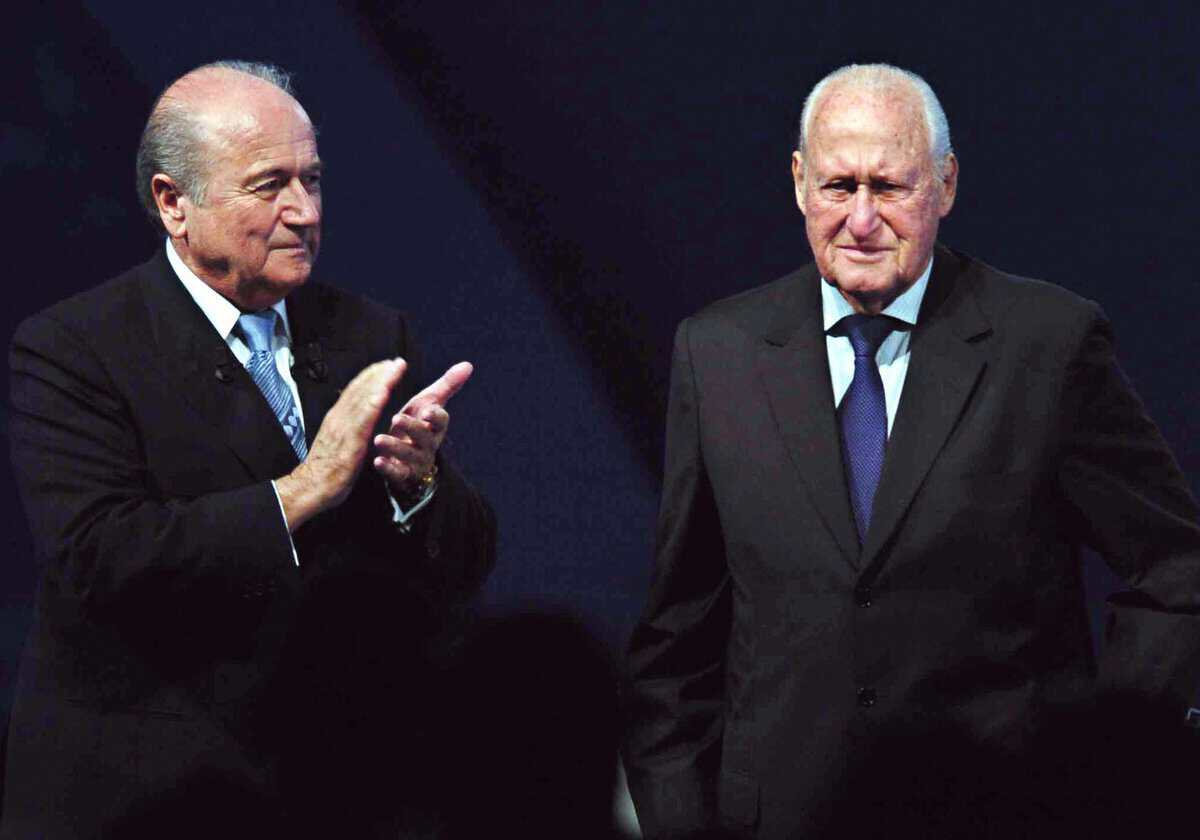
Havelange is the man who actually built the modern, money-soaked FIFA that Infantino now runs. He expanded the World Cup from 16 teams to 24 and then 32, courted the sponsors who turned the tournament into a global television product, and ran the organisation for 24 years — longer than anyone else in its history. He also, it later emerged, personally banked at least 1.5 million Swiss francs in bribes from FIFA’s own marketing partner, ISL, while his former son-in-law took in more than twelve million on top. Havelange resigned FIFA’s honorary presidency in 2013, with the organisation’s own ethics judge concluding his conduct had been “morally and ethically reproachable.” Nobody at FIFA seemed especially shocked.
FIFA has had nine presidents since its founding in 1904. Havelange’s 24 years remain the longest reign; Infantino is currently on course to serve 15.
Of the last four men to hold the job, three have left office under a cloud — Rous lost an election fought largely over apartheid, Havelange resigned in disgrace, and Blatter quit days after a fifth election win as a US corruption case broke around him.
FIFA’s annual revenue has grown roughly eightfold during Infantino’s presidency, driven heavily by Saudi sponsorship and the expanded 48-team World Cup format.
Then there’s Sepp Blatter — less a single scandal than a slow-motion one, stretched across 17 years and punctuated by some of the most quotable nonsense ever uttered by a sports administrator. He suggested women’s football might draw bigger crowds if players wore “tighter shorts.” Asked how gay fans should handle a World Cup in a country where homosexuality was illegal, his advice was that they should “refrain from any sexual activities.” He responded to a question about on-field racism by recommending a handshake. None of that finished him. What finished him was the US Department of Justice, which in 2015 unveiled a 24-year, $150 million bribery scheme involving FIFA officials, just days after Blatter had been re-elected to a fifth term. He resigned within the week.
Which brings us back to the man currently in the job. Infantino arrived in 2016 on an explicit reform platform — more transparency, proper term limits, a clean break from the Blatter-era culture of cash in envelopes. Eight years and one creatively recalculated term limit later, the pattern looks less like reform and more like a different flavour of the same problem: courting money and power rather than personally skimming it, but with the same thin skin and the same eventual conviction that any criticism says more about the critic than the conduct.
If the question is whether Gianni Infantino is uniquely bad for the job, the honest answer is no. He fits a pattern that goes back decades: Rous’s colonial blind spot, Havelange’s bribes, Blatter’s gaffes and indictment, and now Infantino’s billionaire-courting, term-limit-redefining spell at the top. The FIFA presidency has rarely produced a popular figure who lasted, and it has never once produced a president who left office because FIFA’s own machinery decided enough was enough.
What is different this time is the scale. Havelange skimmed millions from a marketing partner; FIFA’s revenue under Infantino has grown roughly eightfold in a decade, with billions more on the table from the 48-team format and Saudi Arabia’s fast-tracked 2034 hosting rights. The bigger the pot gets, the bigger the incentive for whoever’s holding the ladle to make sure nobody changes the recipe.
The lesson from 122 years of this is fairly bleak: the only reliable check on a FIFA president has never come from inside FIFA. It’s come from Swiss prosecutors, the US Department of Justice, anti-apartheid campaigners, or a Brazilian challenger willing to fight an election on principle. FIFA’s own committees have never removed a president for misconduct. They’ve just waited for someone else to do it for them, then quietly rewritten the term limits for whoever’s left.

John Herman is a Leeds-based, would-be football writer and founder of Football Nonsense. Blending fan passion with sharp opinion, attempting to tackle the game’s biggest debates, from the terraces to the boardroom, with honesty, (attempted) humour, and heart.