

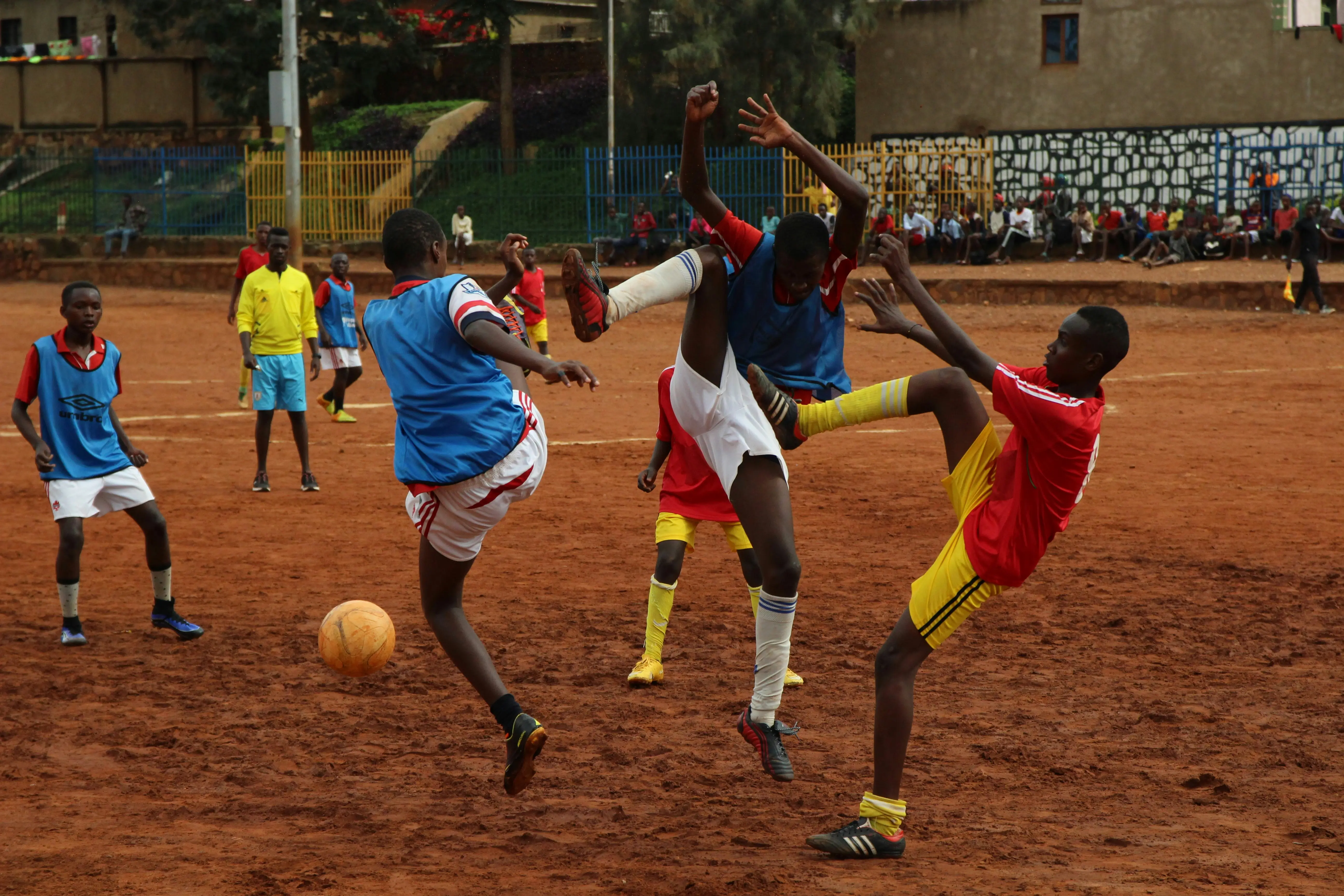
The Handball Rule Madness
How Did We Get Here and What Can We Do About It?
🔴 Introduction: A Rule That’s Driving Us All Mad
Let’s be honest – if there’s one thing that’s guaranteed to get football fans absolutely fuming, it’s a handball decision. Whether you’re watching from the stands, your sofa, or down the pub with a pint, we’ve all had that moment where a handball decision and usually a penalty is given (or not given), and we collectively lose our minds. We shout at the telly, we argue with mates, we spend the next week debating it on social media.
But here’s the thing that really gets my head: the handball rule is supposed to help the game. Instead, it feels like it’s become one of the most divisive aspects of modern football.
We’ve gone from a rule that was simple and relatively uncontroversial to one that has commentators, pundits, and fans all scratching their heads, wondering what on earth just happened and a situation where whenever the ball is perceived to be anywhere near a player’s arm, there are screams for a penalty, with the resultant VAR checks and delays to the game.
There used to be an unwritten rule for referees: if all else failed, apply some common sense. This mindset seems to have disappeared from the refereeing world. As we all know, these days, common sense doesn’t seem to be that common after all.
So let’s have a proper chat about it. What’s the current rule? Why is it so controversial? How did we end up here? And most importantly, is there a better way?
🔵 What’s the Current Handball Rule, Then?
Right, let’s start with the basics, because honestly, perhaps half of the confusion comes from people not actually knowing what the rule says.
As things stand now, the handball rule (Part of Law 12 in the official Laws of the Game) essentially says that it’s a handball offence – and therefore a free kick or penalty – if a player deliberately handles the ball with their hand or arm. Pretty straightforward, right? But it gets murkier…
The current version also includes handball as an indirect (or direct) free kick if the ball touches a player’s hand/arm in certain situations, even if there’s no deliberate attempt to handle the ball. This is where things get properly messy.
🎯 Here are the key situations that count as handball now:
✓ Deliberate handball
If a player sees the ball coming and deliberately moves their hand or arm to block it or control it, that’s handball, no questions asked.
✓ Unnatural body position
This is the controversial one. If a player’s arm/hand is in an “unnatural position” that makes their body bigger, and the ball hits it, it can be handball even if they didn’t mean to handle it.
✓ Blocking a shot
If the ball is deliberately handled to block a shot on goal or a pass, it’s handball.
✓ Gaining possession
If a player deliberately handles the ball to gain a competitive advantage or score, it’s handball (obviously).
✓ Time-wasting
If the goalkeeper handles a deliberate back-pass or throw-in from a teammate, it’s an indirect free kick.
The “unnatural position” bit is the problem. Because what counts as “unnatural” anyway? And don’t even get me started on how much this has been interpreted differently by different officials at different times. It used to be as simple as “in the opinion of the referee”, now it’s a debate among a committee of referees, some of who are not even in the stadium.

⚠️ The Problems: Why We’re All So Frustrated
Let’s talk about why this rule makes us want to throw our remote at the telly.
Problem 1: Nobody Knows What “Unnatural Position” Means
This is the elephant in the room. What does “unnatural” actually mean? If you’re standing with your arms by your side and the ball hits your hand, is that natural or unnatural? What if you’re reaching for the ball? What if you’re jumping and your arm is out for balance?
Here’s the thing – defenders have arms. Players need to balance. But the rule seems to punish them for having arms attached to their bodies. I’ve seen penalties given where a player’s arm was literally in the most natural position imaginable, just… hanging there – because apparently that’s “unnatural” now.
The common sense “rule” we mentioned earlier could play a big part here, but it appears not to, with referees seemingly hiding behind the letter of the law.
Problem 2: The Inconsistency
One week, a handball that looks the same as the week before is given as a penalty. The following week, in what appears to be an identical situation, it isn’t given. Why? Because different referees interpret the rule differently. That’s not football – that’s a lottery.
Having said that, of course, it isn’t easy to compare one decision too rigidly with another, as each has its own unique set of circumstances. That’s not going to stop the debate though 🙂
We’ve also had situations where VAR gets involved and spends five minutes looking at angles, slow motion, this view, that view… and then gives a decision that half the stadium disagrees with. Meanwhile, the game’s stopped, the momentum’s gone, and everyone’s annoyed.
Problem 3: It’s Changed What Defenders Can Do
Defenders now have to think about where their arms are. At some point, this has gone too far. How often have you seen defenders focusing so much on making sure that their arms are out of the way that they forget to actually defend! Players are getting penalised for things that aren’t fouls in any other part of the game. A 30-yard handball decision that changes the entire match? That’s not right.
Problem 4: VAR Has Made It Worse, Not Better
Here’s a controversial take: VAR was supposed to get the big decisions right. Instead, it’s made the handball rule even more contentious. Now we’re stopping the game to check whether a player’s hand was precisely in the correct position, in slow motion from 47 different angles. That’s not in the spirit of the game.
And another thing – VAR seems to overthink handball. Sometimes the referee on the pitch makes a common-sense decision, only for VAR to overrule it. Or VAR calls something in that the referee completely missed. The inconsistency is maddening.
🟢 How We Got Here: A Brief History of the Handball Rule
To understand why we’re so frustrated now, it helps to understand how the rule has evolved. And trust me, it’s been a journey.
📅 The Simple Days: Before 2012
For most of football history, the handball rule was dead simple: if you deliberately handled the ball, it was a handball offence. That was it. Deliberate. That was the keyword.
Defenders could have their arms where they needed them. Players could jump, and their arms could come out naturally. The referee made a simple decision: did they deliberately handle it? Yes or no? Done.
This meant there were fewer stoppages, fewer controversial decisions, and frankly, the game was better for it. Handball decisions were rare because they had to be blatant and deliberate.
📅 The First Big Change: 2012-2015
In 2012, FIFA began making the rules more complicated. They introduced the concept of “making the body bigger” – the idea that if a player’s arm position made them bigger and unnatural, it could be considered handball even without deliberate intent.
This seemed like a good idea on paper. It was supposed to stop defending, feeling like cheating. But it opened a Pandora’s box of interpretation.
📅 The VAR Era Begins: 2018 Onwards
When VAR was introduced, the handball rule suddenly became a significant focus. Every handball decision, literally every single one, could be reviewed and looked at. And re-looked at, and analysed frame by frame.
This is where things really went off the rails. Suddenly, referees weren’t making commonsense decisions anymore. They were looking for any marginal contact, plus we have a team of video refs, looking for an opportunity to call for a decision. The game changed overnight.
📅 2020-2021: The Attempt to Simplify (Sort Of)
By 2020, even FIFA realised things had gotten out of hand. They tried to simplify the rule. But in practice? Nothing really changed because the interpretation was still fuzzy.
📅 Present Day: Chaos
Here we are now, and the handball rule is still a mess. We’ve got officials and VAR operators making marginal calls about arm positions that affect entire matches. We’ve got fans losing their minds. We’ve got some of the best moments in football being ruined by reviewing a handball that happened 40 yards away from where the ball ended up.
💡 How the Handball Rule Could Actually Work Better
Okay, so the rule is a mess. What could we actually do about it? Here are some thoughts:
Option 1: Go Back to Deliberate Intent
Honestly? I would vote to go back to the old days. Handball is only handball if it’s deliberate. Refs make a simple call: did they mean to handle it? If yes, it’s a foul. If no, play on.
✓ Pros: Eliminates 80% of controversy. Speeds the game up. Let’s defenders actually defend.
✗ Cons: Sometimes players get away with obvious helping moments.
Option 2: Handball in the Box Only
Only call handball as a penalty if it directly prevents a goal. A handball on the line that blocks a shot? Penalty, (and obviously a red card). A handball deep in midfield that’s not affecting anything? Play on.
✓ Pros: Reduces marginal calls. Focuses on what actually matters.
✗ Cons: Sometimes hard to define “directly prevents a goal.”
Option 3: A Clear, Objective Handball Line
What if we drew an actual line? Like: if the ball hits your hand above shoulder height and you’re defending, it’s handball. Below shoulder height? It’s not (unless deliberate).
✓ Pros: Clear. Objective. Eliminates interpretation. Everyone knows where they stand.
✗ Cons: Some situations would look silly. Hard to define for different contexts. Perhaps not too different to the current thinking.
Option 4: Limit VAR’s Role
What if handball were one of those decisions that VAR couldn’t review unless it were absolutely blatant?
If it takes more than 30 seconds of looking at multiple angles to figure out if it was handball, then it probably wasn’t obvious enough to overturn the on-field decision.
✓ Pros: Speeds up the game. Takes away the frustration of endless reviews.
✗ Cons: Might miss some obvious handballs.
Option 5: The Common-Sense Approach
The best solution might be the simplest: let referees use their common sense. Is the handball clearly affecting the outcome of the play? Is it obviously deliberate? Is it obviously an accident that nobody can blame the player for?
If the answer’s no to any of these, don’t give it as a foul. Trust the officials to make sensible decisions rather than trying to legislate every possible scenario.
🎯 What I Actually Think Should Happen
Full transparency here, this is my personal opinion as a football fan who’s watched hundreds of matches get ruined by this rule.
My Solution:
Handball is when a player deliberately handles the ball, or when they handle it with their arm in a position that’s clearly making their body bigger to block a shot or a pass they were never going to get.
That’s it. No more analysing frame-by-frame. No more 10-minute VAR reviews for marginal incidents.
And crucially: If it takes more than a few seconds to figure out whether it’s handball, then it’s not a clear enough incident to change the game.
Surely the purpose of a rule should be to make the sport better, fairer, and more enjoyable. The current handball rule does none of those things. It makes the sport slower, more confusing, and less entertaining.
Conclusion: We Need To Fix This
Look, I get why FIFA brought in stricter handball rules. They wanted to stop blatant cheating, they wanted to protect attacking players, and they wanted to be fair to everyone. Those are good intentions.
But the road to hell is paved with good intentions, and the current handball rule is proof of that.
We’re at a point where the tail is wagging the dog. The handball rule isn’t serving football anymore; rather, football is serving the handball rule. We’re stopping the game constantly, we’re making decisions that ruin crucial moments, and we’re doing it all based on a rule that nobody seems to fully understand or agree with.
Something’s got to change.
The beautiful game shouldn’t be interrupted every five minutes to figure out if someone’s arm was in an “unnatural position.” That’s not football. That’s bureaucracy with a ball.
What do you reckon?
Am I talking sense, or have I lost the plot? Drop a comment below and let me know what you think the handball rule should be.
I reckon this is a conversation the game needs to have.

John Herman is a Leeds-based, would-be football writer and founder of Football Nonsense. Blending fan passion with sharp opinion, attempting to tackle the game’s biggest debates, from the terraces to the boardroom, with honesty, (attempted) humour, and heart.