
Why Brentford Are Called
The Bees.
A college war cry, a misheard chant, and a journalist who got it slightly wrong. The accidental nickname that has defined a west London club for over 130 years.
Most football nicknames have a story behind them. A few have a founding myth. Brentford’s has something rarer still — a founding mistake. The Bees are called the Bees not because anyone decided they should be, not because of anything to do with the area or the club’s history or the colour of their shirts, but because a group of college students turned up to a match in the 1890s, shouted their college chant, and a journalist in the press box heard it wrong. That was it. That was enough. A mishearing, preserved in print, became one of English football’s most enduring identities.
Brentford Football Club were founded in 1889, growing out of the local sporting scene in a west London town that already had a rowing club and a cricket club and was looking for something to do in winter. Their early years were unremarkable — a club finding its feet in local leagues, moving between grounds, gradually building the infrastructure of a proper football club. The nickname, when it arrived, had nothing to do with any of that. It came from outside the club entirely.
The Man, the Chant, and the Mishearing
In the 1894–95 season, a Brentford player named Joseph Gettins had friends at Borough Road College — a teacher training institution in west London. College friends attending matches was unremarkable enough. What mattered was what they shouted.
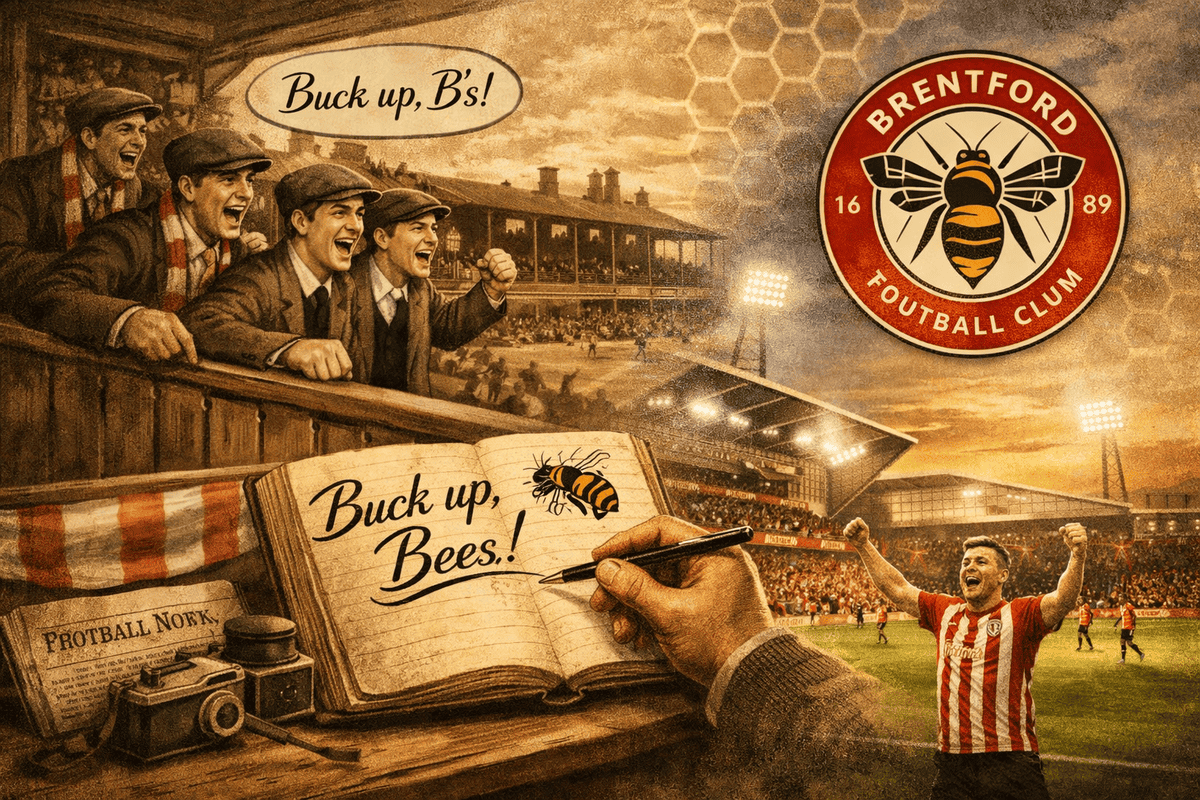
Borough Road College had a war cry. Like many institutions of the era, they had developed a particular chant that students would use at sporting events to rally their team. The chant was simple: “Buck up, B’s.” The B’s referred to Borough Road — an abbreviation of the college name, used as a rallying shorthand. When Gettins’s friends arrived at the Brentford ground and found themselves wanting to show their support, they fell back on the only chant they knew. “Buck up, B’s” rang out from the stand.
The local press were there. And somewhere between the stand and the press box, the letter B became a word. “Buck up, Bees” was what was reported. Whether it was a genuine mishearing, a reasonable assumption, or simply a journalist making sense of something slightly unclear, nobody now can say. What is certain is that the name appeared in print, and once a football nickname appears in the local press, its fate is largely sealed.
The nickname was unintentionally created by students of Borough Road College, when they attended a match and shouted the college’s chant “buck up Bs” in support of their friend. Local newspapers misheard the chant as “Buck up Bees” and the nickname stuck.
Brentford F.C., Wikipedia
From Accident to Identity
What is striking about the Bees nickname is how completely Brentford embraced an identity that arrived by accident. Other clubs have fought over nicknames, debated them, held polls and competitions and editorial campaigns. Brentford appear to have simply accepted the Bees and got on with it — and over the 130 years since, the club has leaned into the bee imagery with considerable enthusiasm.
The bee has appeared on Brentford’s badge in various forms across different eras. The club’s red and white striped kit has been linked, somewhat loosely, to the bee’s stripes. A local pub near Griffin Park called the Beehive became associated with the nickname and the club in local lore — though whether the pub inspired any additional bee imagery, or whether the connection was simply one of convenient proximity, remains unclear.
There is also the matter of the alliterative headline tradition. Local newspapers covering Brentford discovered early that “Bees” was a gift to any sports sub-editor looking for a compelling back page. A 1936 Thomson stamp album records a headline celebrating a Brentford win as “Busy Bees beat bewildered opponents by brisk and brilliant bombardments” — a sentence that says considerably more about the pleasures of alliteration than about the actual football, but which captures something of the affection the nickname generated.
The nickname originated in the 1894–95 season, when Borough Road College students attended a match to support their friend Joseph Gettins.
Brentford were founded in 1889, meaning the Bees nickname has been associated with the club for all but five years of its existence.
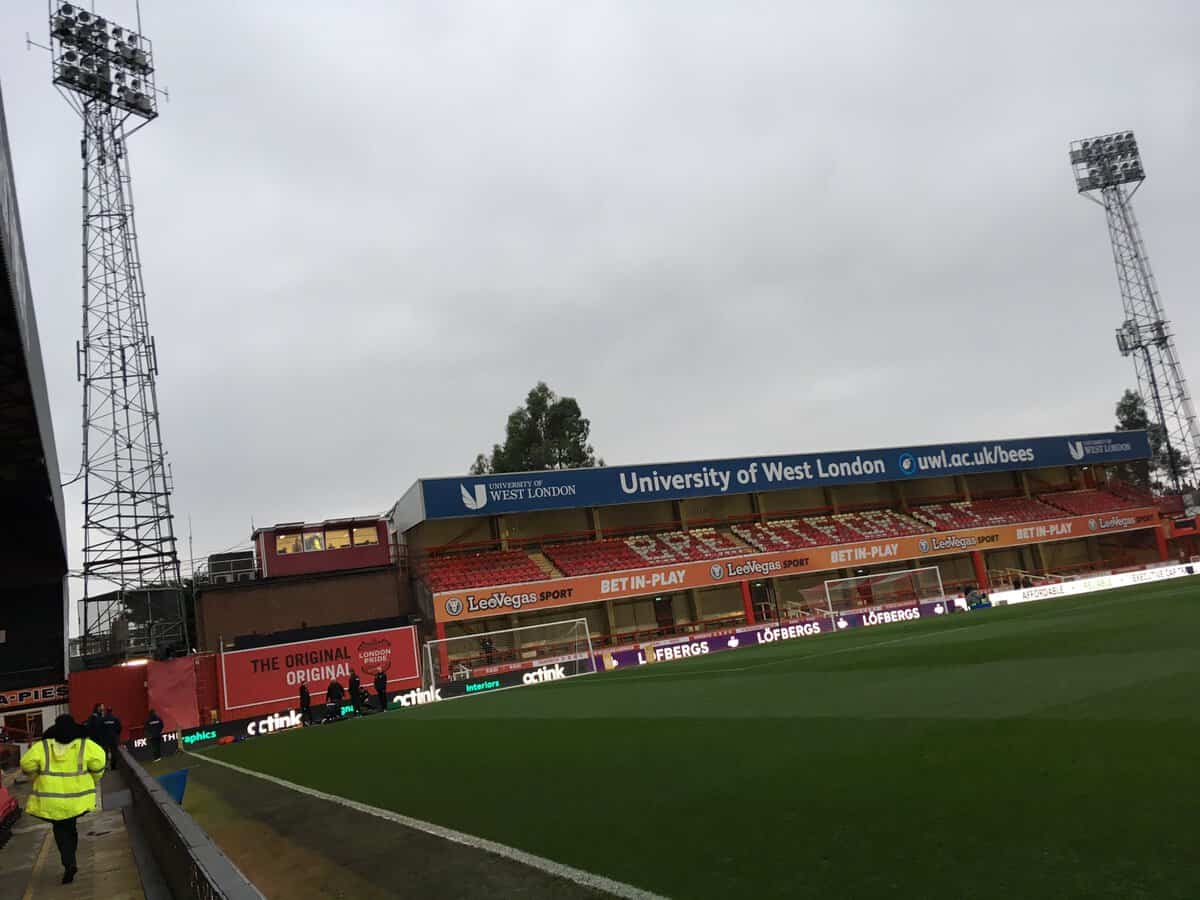
Griffin Park, their home from 1904 to 2020, was notable for having a pub on each corner — none of them called the Beehive, despite local legend.
Brentford reached the Premier League for the first time in 2021, over 125 years after the nickname was accidentally created.
The Nickname That Fits Despite Everything
There is a particular pleasure in the Brentford story because the nickname, accidental as it was, turned out to suit the club rather well. Bees are industrious, collective, associated with west London in a way that is hard to precisely define but feels instinctively right. The image of a bee — busy, purposeful, operating as part of a larger whole — maps onto something real about how Brentford have operated, particularly in their recent rise through the divisions under a distinctly collective and data-driven philosophy.
None of that was in anyone’s mind in 1895. Joseph Gettins’s college friends were not making a statement about football philosophy. They were shouting their college chant, slightly too far away from a journalist for the consonants to carry cleanly. But accidents, in football as in most things, have a way of becoming permanent.
The Bees have been the Bees for over a century now. The college that started it all — Borough Road, later merged into what became Brunel University — no longer exists in its original form. Griffin Park, where the nickname first echoed around a proper ground, was demolished after Brentford moved to the Brentford Community Stadium in 2020. Joseph Gettins is long forgotten by most supporters. But the chant that his friends misdelivered, and the journalist who misheard it, left something that has outlasted all of them.
Previously: Why Exeter City are called the Grecians — and what an ancient siege has to do with a football club in Devon.
Next: Why Wrexham are called the Red Dragons — and what has that got to do with bags of sugar ?

John Herman is a Leeds-based, would-be football writer and founder of Football Nonsense. Blending fan passion with sharp opinion, attempting to tackle the game’s biggest debates, from the terraces to the boardroom, with honesty, (attempted) humour, and heart.